Informative

Searching a Job in 2025: Expert Tips for Faster Results

Chandini
10 minutes
Searching a Job in 2025: Expert Tips for Faster Results

The job market has undergone a seismic shift as we settle into 2025. The strategies that secured employment just a few years ago now feel archaic and ineffective. The days of mass-mailing a generic resume and waiting for a phone call are effectively over. Today, the recruitment landscape is dominated by sophisticated algorithms, artificial intelligence, and a level of competition that spans globally thanks to the normalization of remote and hybrid work models. For candidates in major tech hubs and bustling metropolitan cities, the challenge is no longer just about having the right skills; it is about visibility and precision.

In this hyper-digital era, speed and adaptability are your most valuable assets. Recruiters are using advanced tools to filter thousands of applicants in seconds, meaning your application might be rejected before a human ever sets eyes on it. To survive and thrive in this environment, you need to upgrade your approach. You must think like the machines that screen you while retaining the human touch that hires you. This guide outlines the expert strategies required to navigate the 2025 employment ecosystem, ensuring that you land your next role not just eventually, but quickly.

The Evolution of the Resume: Beating ATS 2.0

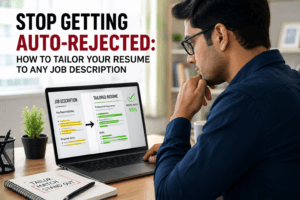
The Applicant Tracking Systems (ATS) of 2025 are far smarter than their predecessors. They no longer just scan for exact keyword matches; they analyze context, career trajectory, and the semantic meaning behind your bullet points.

  • Contextual Keyword Optimization Simply stuffing your resume with buzzwords is now a strategy that backfires, as modern algorithms can detect keyword stuffing and penalize it.
  • Semantic Relevance Instead of just listing a skill like “Project Management,” you must weave it into a sentence that describes the scope, such as “Led cross-functional teams using Agile Project Management methodologies to deliver software updates.” This approach tells the AI not just that you know the concept, but that you have applied it in a practical, value-generating scenario that matches the job description.
  • Quantifiable Impact Every claim on your resume must be backed by data, as algorithms prioritize candidates who demonstrate measurable success over those who list vague duties. Replace generic phrases like “Responsible for sales” with specific metrics like “generated 20 percent year-on-year revenue growth,” which provides concrete proof of your capability to deliver results.
  • Format and Readability While creativity is appreciated in design roles, for most corporate positions, standard formatting remains king because it ensures error-free parsing.
  • Clean Hierarchy Stick to a clean, single-column layout with distinct headings, as complex multi-column designs often confuse parsing software and result in scrambled data. Ensure that your contact information, work history, and education are clearly separated, allowing the system to populate your candidate profile accurately without manual intervention.
  • Hyperlink Verification Ensure that links to your portfolio, LinkedIn profile, or GitHub repository are active and lead directly to the specific work you want to showcase. Broken links are an immediate red flag that suggests a lack of attention to detail and can prevent a recruiter from verifying your actual project work.
Job Search 2

Leveraging Advanced Tools: The JobUAI Advantage

In 2025, using AI to fight AI is not cheating; it is necessary leveling of the playing field. This is where JobUAI becomes an essential component of your search strategy. While recruiters use AI to filter you out, you must use JobUAI to ensure you stay in. JobUAI is a comprehensive platform designed to optimize every stage of your job hunt, from the initial application to the final interview.

  • AI-Driven Interview Simulations The fear of the unknown is what causes most interview failures. JobUAI eliminates this by simulating the exact environment you will face.
  • Role-Specific Mock Interviews JobUAI generates interview questions tailored specifically to the job description you are targeting, covering both technical and behavioral aspects. This targeted practice ensures you are not wasting time on generic questions but are instead preparing for the specific challenges and scenarios relevant to your desired role.
  • Real-Time Behavioral Analysis The platform analyzes your voice modulation, pacing, and use of filler words, providing instant feedback on how you sound to a potential employer. This data-driven coaching helps you correct nervous habits like speaking too fast or mumbling, ensuring you project confidence and authority during the actual interaction.
  • Resume Scoring and Gap Analysis You cannot fix what you do not know is broken. JobUAI acts as a personalized career coach that audits your application materials.
  • Automated Content Optimization Upload your resume to JobUAI to receive a detailed score based on industry standards and a comparison against the job description. The tool highlights missing keywords and suggests stronger action verbs, effectively transforming a passive document into a compelling marketing pitch that passes through screening filters.
  • Skill Gap Identification Beyond just formatting, the platform identifies hard skills that are frequently requested in your target industry but are missing from your profile. This insight allows you to quickly take a short course or complete a certification to fill that gap, making you a more attractive candidate for the current market demands.

Mastering the “Hidden” Job Market

A significant percentage of vacancies in 2025 are never advertised on public job boards. They are filled through referrals, internal movements, and direct outreach. Accessing this hidden market requires a shift from passive applying to active networking.

Digital Networking 2.0 Networking is no longer about exchanging business cards; it is about digital presence and value creation.

  • Thought Leadership Start posting regular content on professional networks related to your field, sharing insights, industry news, or case studies of your past work. This activity signals to recruiters and hiring managers that you are an engaged expert in your domain, often attracting inbound opportunities without you needing to apply.
  • Strategic Direct Messaging Identify hiring managers at your target companies and send them personalized connection requests that mention a specific problem their team might be facing. A message that offers a solution or demonstrates deep research into their company stands out significantly more than a generic request for a job.

Alumni and Community Engagement Your alma mater and professional communities are powerful, underutilized resources.

  • Leveraging Alumni Networks Reach out to seniors or batchmates from your college who are currently working in organizations you aspire to join. Alumni are often more willing to refer a candidate from their own institute because there is a shared background and a pre-existing level of trust.
  • Niche Community Participation Join specialized online communities or local meetups relevant to your skill set, whether it is coding, digital marketing, or finance. Active participation in these groups often leads to insider information about upcoming openings before they are made public, giving you a head start on the competition.

The Interview: Speed and Adaptability

In 2025, the interview process moves fast. Virtual first rounds are the standard, and decisions are often made within days. You must be ready to demonstrate value immediately.

  • Virtual Presence Mastery Your ability to communicate through a screen is now considered a core soft skill.
  • Technical Reliability Ensure you have a high-speed internet connection and a backup hotspot ready, as technical glitches are less forgiven in a world where remote work is the norm. A stable connection, clear audio, and high-definition video demonstrate that you are professional and ready to integrate seamlessly into a remote or hybrid team.
  • Environment Control Create a dedicated, quiet space for interviews with professional lighting and a clutter-free background. This visual discipline shows the interviewer that you are organized and take the opportunity seriously, distinguishing you from candidates who treat virtual interviews casually.
  • Adaptive Communication Style You must be able to pivot your communication style based on who you are speaking to.
  • Reading Digital Cues Pay close attention to the interviewer’s facial expressions and tone, as these are the only feedback mechanisms you have in a virtual setting. If they seem disengaged, pause and ask a checking question to re-establish connection, rather than continuing to monologue through a prepared answer.
  • Concise Storytelling Time is money, and modern attention spans are short; structure your answers to be impactful and concise. Use the STAR method (Situation, Task, Action, Result) to deliver complete yet brief stories that highlight your problem-solving abilities without boring the listener with unnecessary details.
Job Search 1

Mental Resilience and Routine

The job search process in 2025 can be mentally exhausting due to the sheer volume of information and the speed of rejection. Maintaining a strong mental game is as important as your resume.

  • Structured Daily Routine Treat the job search like a full-time job to maintain discipline and prevent burnout.
  • Dedicated Application Blocks Set aside specific hours of the day for applying to jobs and other hours for skill development, rather than doing everything randomly. This structure prevents the feeling of being overwhelmed and ensures that you are making consistent progress every single day.
  • Rejection Management Understand that rejection is often automated and not a personal reflection of your worth. View every rejection as a data point that helps you refine your approach, whether it means tweaking your resume or improving your interview answers for the next opportunity.

Conclusion

Finding a job in 2025 requires a blend of technological savvy and human adaptability. The landscape has evolved, rewarding those who can navigate the algorithms while still connecting authentically with people. It is no longer enough to just be good at what you do; you must be good at showing it to the right machines and the right people.

Do not let the complexity of the process intimidate you. Equip yourself with the right tools. Platforms like JobUAI are built to give you the competitive edge you need, turning the daunting task of preparation into a manageable, data-driven process. By optimizing your resume, mastering your interview technique, and maintaining a proactive mindset, you can cut through the noise. The opportunities are out there, waiting for the candidate who is prepared to seize them with speed and precision.

Frequently Asked Questions (FAQs)

Q1: How important is a cover letter in the 2025 job market?

Answer: While many applicants skip them, a well-written cover letter remains a powerful differentiator for roles that require strong communication skills. It allows you to explain gaps in your resume or express genuine passion for the company’s mission, which a standard CV cannot convey. For senior roles or creative positions, a personalized note is often expected and can be the deciding factor. It adds a human element to an otherwise automated application process.

Q2: Should I use AI to write my resume and cover letter?

Answer: You can use AI to generate ideas and structure your content, but you should never copy and paste the output directly. AI-generated text often sounds generic and can be flagged by sophisticated screening tools used by recruiters. It is essential to infuse your own voice and specific, verifiable achievements into the text. The goal is to use AI as an assistant, not as a replacement for your personality.

Q3: How can JobUAI help if I am switching careers?

Answer: JobUAI is particularly useful for career switchers because it identifies transferable skills that apply to your new target role. The platform can analyze your past experience and suggest how to rephrase it to match the terminology and requirements of the new industry. It also provides mock interview scenarios for the new role, helping you practice answers to questions you have never faced before. This builds confidence in your ability to pivot successfully.

Q4: Is networking on LinkedIn really necessary for getting hired?

Answer: Yes, active networking on professional platforms is critical because a large portion of job openings are filled before they are ever advertised publicly. Engaging with industry content and connecting with hiring managers increases your visibility and puts you on the radar of decision-makers. It transforms you from an unknown applicant into a familiar face. In a competitive market, this familiarity often leads to interview invitations.

Q5: What is the biggest mistake candidates make in virtual interviews?

Answer: The most common mistake is poor technical preparation, such as bad audio quality or an unstable internet connection. This disrupts the flow of conversation and frustrates the interviewer, creating a negative impression regardless of your skills. Another major issue is lack of eye contact; candidates often look at the screen instead of the camera. Fixing these technical and behavioral basics is the easiest way to improve your success rate.